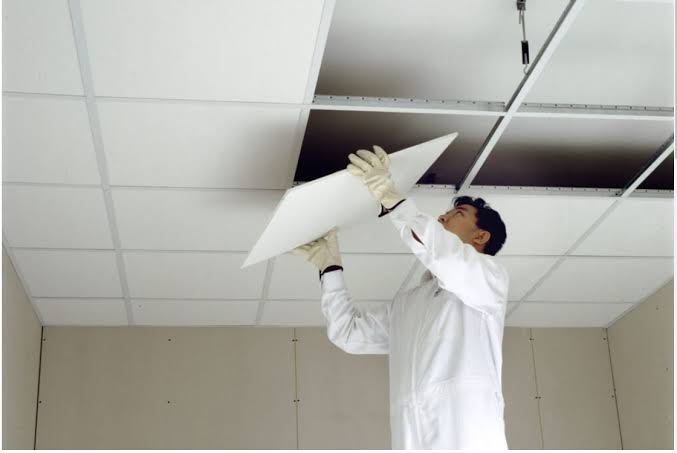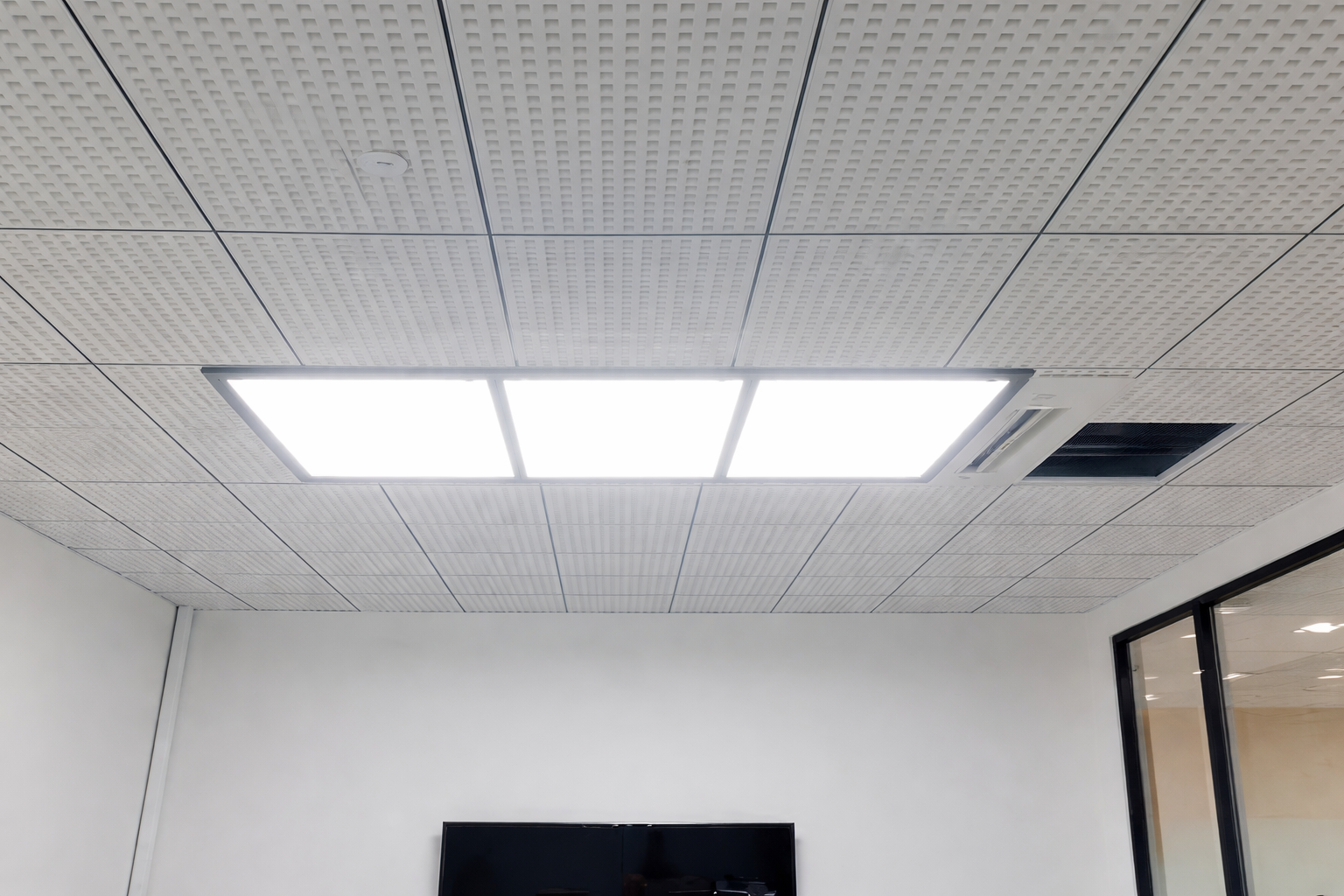
A Grid Ceiling, also known as a suspended or drop ceiling, is a modular ceiling system consisting of a metal framework that supports ceiling tiles or panels.
This type of ceiling is widely used in commercial, residential, and institutional spaces due to its functionality and aesthetic appeal. Grid ceilings provide easy access to electrical wiring, HVAC systems, and plumbing, making maintenance simple and efficient.
They enhance acoustics, improve insulation, and give interiors a clean, professional finish. Available in various materials, textures, and designs, grid ceilings can be customized to match different architectural styles.
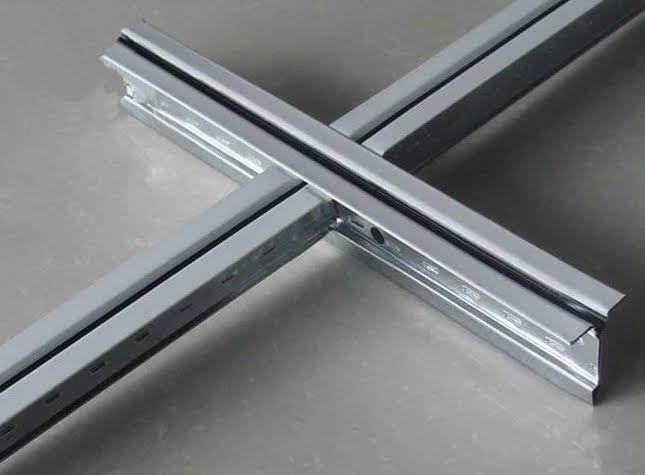
T-Grid ceiling channels form the structural framework of suspended ceiling systems. They securely support ceiling tiles while allowing easy installation, maintenance, and alignment.
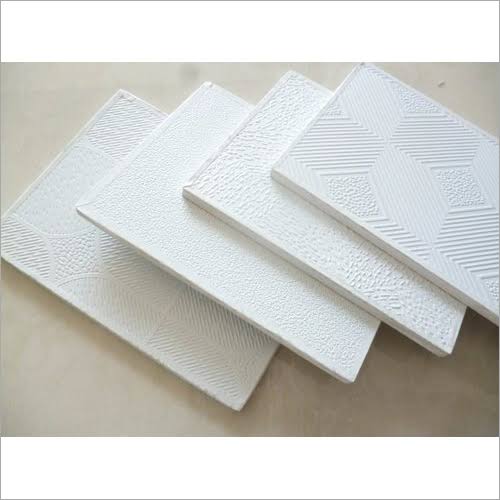
White gypsum ceiling tiles provide a clean and elegant finish while offering sound insulation and fire resistance. Ideal for offices, hospitals, and commercial interiors.
Galvanised grid false ceilings offer durability and corrosion resistance. They provide a strong framework for ceiling systems and ensure long-lasting structural stability in commercial and residential projects.
Key specifications and performance features of grid ceiling systems.
Available in gypsum, metal, PVC, and mineral fiber to suit various interior and functional requirements.
Standard sizes include 600mm × 600mm and 600mm × 1200mm for modular and flexible ceiling layouts.
Designed to reduce noise levels and improve sound insulation in office and commercial environments.
Certain panels are fire-rated, offering enhanced safety and compliance with building regulations.
Suitable for humid areas such as bathrooms and kitchens with moisture-resistant panel options.
Allows quick installation and easy access to concealed wiring, ducts, and HVAC systems for maintenance.